
Interior signage is often underestimated in business environments, yet it plays a critical role in shaping how customers navigate, perceive, and interact with a space. While exterior signs attract customers, interior signs guide them, reinforce branding, and directly influence overall customer satisfaction.
Well-planned interior signs improve flow, reduce confusion, enhance professionalism, and create a more comfortable and intuitive environment. For retail stores, offices, clinics, restaurants, and service-based businesses, interior signage is a key part of the customer experience strategy.
Why Interior Signage Matters for Customer Experience
Interior signs do more than provide directions. They shape behavior and perception inside your business space.
First Impression Continues Indoors
The customer experience does not stop at the entrance.
Key roles of interior signage:
- Guides customers through the space
- Reinforces brand identity
- Reduces staff dependency for direction
- Improves operational efficiency
- Enhances perceived professionalism
A well-designed interior signage system ensures customers feel confident and comfortable navigating your business.
Wayfinding Signs (Directional Interior Navigation)
Wayfinding signage helps customers move through a space without confusion.
What Wayfinding Signs Include
Common examples:
- Directional arrows
- Room labels
- Department identifiers
- Floor directories
- Section markers
Benefits of Wayfinding Signs
- Improved Customer Flow – Customers can easily find what they need without asking for assistance.
- Reduced Staff Workload – Employees spend less time giving directions.
- Better Space Utilization – Clear navigation encourages customers to explore more areas of your business.
Lobby and Reception Signs (Brand Identity Anchors)
Reception signage is often the most visible interior branding element.
What Reception Signs Do
Key functions:
- Display company name and logo
- Reinforce brand identity immediately
- Set tone for customer expectations
Types of Lobby Signs
- Dimensional Letter Signs – Raised letters mounted directly to walls for a professional, modern look.
- Acrylic Panel Signs – Printed logos mounted on clear or frosted acrylic panels.
- Metal Signs – Brushed aluminum or stainless steel signs for premium branding.
Impact on Customer Perception
- Professional credibility – A strong reception sign increases trust and confidence in your business.
- Brand reinforcement – Customers immediately associate the space with your brand identity.
ADA and Compliance Signage (Accessibility and Legal Requirements)
Accessible signage ensures your business meets regulatory standards while improving usability for all customers.
What ADA Signs Include
Typical applications:
- Restroom signage
- Exit signs
- Room identification signs
- Braille signage elements
Benefits of ADA-Compliant Signs
- Legal compliance – Helps businesses meet accessibility regulations.
- Inclusive customer experience – Ensures all visitors can navigate the space comfortably.
- Clear visual structure – Improves overall clarity of interior environments.
Door and Room Identification Signs
These are essential for organizing internal spaces clearly and professionally.
What They Include
Examples:
- Office numbers
- Meeting room names
- Staff-only areas
- Service rooms
Why They Matter
- Reduced confusion – Customers and staff can easily identify rooms.
- Professional organization – Creates a structured and efficient environment.
- Better operational flow – Improves daily business operations.
Retail Interior Signs (Sales and Branding Enhancers)
Retail environments benefit heavily from promotional and branding signage inside the store.
Types of Retail Interior Signs
- Promotional signs – Highlight discounts, sales, and special offers.
- Product category signs – Guide customers to specific product sections.
- Branding graphics – Wall murals, logos, and thematic visuals.
Customer Experience Benefits
- Increased engagement – Customers are more likely to explore promotions.
- Improved purchasing decisions – Clear category signage helps customers find products faster.
- Enhanced brand storytelling – Visual elements reinforce brand identity.
Menu Boards and Service Signs (Restaurants and Cafés)
Food service businesses rely heavily on interior signage to guide ordering behavior.
Types of Menu Signs
- Static menu boards – Printed or mounted menus displayed behind counters.
- Digital menu displays – LED or screen-based menus for dynamic updates.
- Wall-mounted service lists – Simplified service or pricing boards.
Benefits for Customer Experience
- Faster ordering process – Clear menus reduce wait times and confusion.
- Increased upselling opportunities – Strategic placement highlights premium items.
- Improved visual appeal – Professional menus enhance perceived food quality.
Office Interior Signs (Corporate Environment Branding)
Office signage supports internal structure and external client perception.
Common Office Sign Types
- Department signage – Identifies different teams or divisions.
- Conference room signs – Helps schedule and identify meeting spaces.
- Branding walls – Displays company mission, values, or achievements.
Customer Experience Impact
- Strong corporate identity – Reinforces professionalism during client visits.
- Better visitor navigation – Clients can move through offices without assistance.
- Enhanced workplace culture – Branded environments improve employee morale.
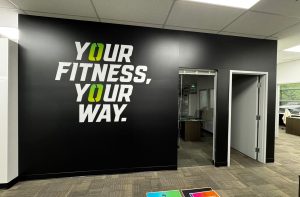
Wall Graphics and Decorative Branding
Interior wall graphics combine aesthetics with branding and storytelling.
What They Include
Common applications:
- Brand slogans
- Large-scale imagery
- Motivational messaging
- Product visuals
Benefits of Wall Graphics
- Immersive brand experience – Customers feel more connected to your brand story.
- Visual differentiation – Helps businesses stand out from competitors.
- Space enhancement – Transforms plain walls into marketing assets.
Floor Graphics (Underused but Effective)
Floor signage is an often overlooked but highly effective interior branding tool.
Types of Floor Graphics
- Directional floor decals – Guide customer movement through space.
- Promotional floor graphics – Highlight deals or featured products.
- Safety and instructional markings – Used in industrial or retail environments.
Benefits
- High visibility – Customers naturally look down while walking.
- Efficient space usage – Uses floor space that is often unused.
- Strong engagement impact – Novelty factor increases attention.
Digital Interior Signage (Modern Customer Experience Upgrade)
Digital signage adds flexibility and real-time communication inside businesses.
Types of Digital Signs
- LED screens – Display promotions, menus, or announcements.
- Interactive kiosks – Allow customers to self-navigate or place orders.
- Information displays – Show schedules, updates, or announcements.
Customer Experience Benefits
- Real-time updates – Content can be changed instantly.
- Increased engagement – Motion graphics attract attention.
- Modern brand perception – Creates a tech-forward business image.
Designing Effective Interior Signage Systems
A strong interior signage system is planned, not random.
Key Design Principles
- Consistency – Fonts, colors, and materials should align with brand identity.
- Hierarchy – Important signs should be more visible than secondary ones.
- Simplicity – Avoid clutter to maintain readability and clarity.
Common Mistakes in Interior Signage
Poor signage design can negatively affect customer experience.
Overloading Information
- Problem: Too much text or too many signs confuse customers.
Inconsistent Branding
- Problem: Mixing styles weakens brand identity.
Poor Placement
- Problem: Signs placed too high, low, or hidden reduce effectiveness.
How Interior Signs Improve Business Performance
Interior signage is not just decorative—it impacts revenue and efficiency.
Business Benefits
- Increased customer satisfaction – Customers feel more comfortable navigating the space.
- Higher conversion rates – Clear guidance leads to more purchases or service usage.
- Improved operational efficiency – Staff spend less time assisting with directions.
Interior signs play a critical role in shaping customer experience across all types of businesses. From wayfinding systems to branded wall graphics, every sign contributes to how customers perceive and interact with your space.
A well-designed interior signage strategy improves navigation, strengthens branding, and enhances overall satisfaction. Businesses that invest in professional interior signage systems create environments that are not only functional but also memorable and engaging.